

Open shelves are one of my favorite places in a home. They sit at eye level, they catch the light, and they tell guests who lives there before anyone says a word. They are also the spot most people tell me they struggle with. Either the shelves end up empty and cold, or they fill up until nothing stands out.
The brass étagère in these photos is one I come back to again and again. I restyle it with the seasons or when inspiration strikes, and each time I follow the same few rules.
Start With Books
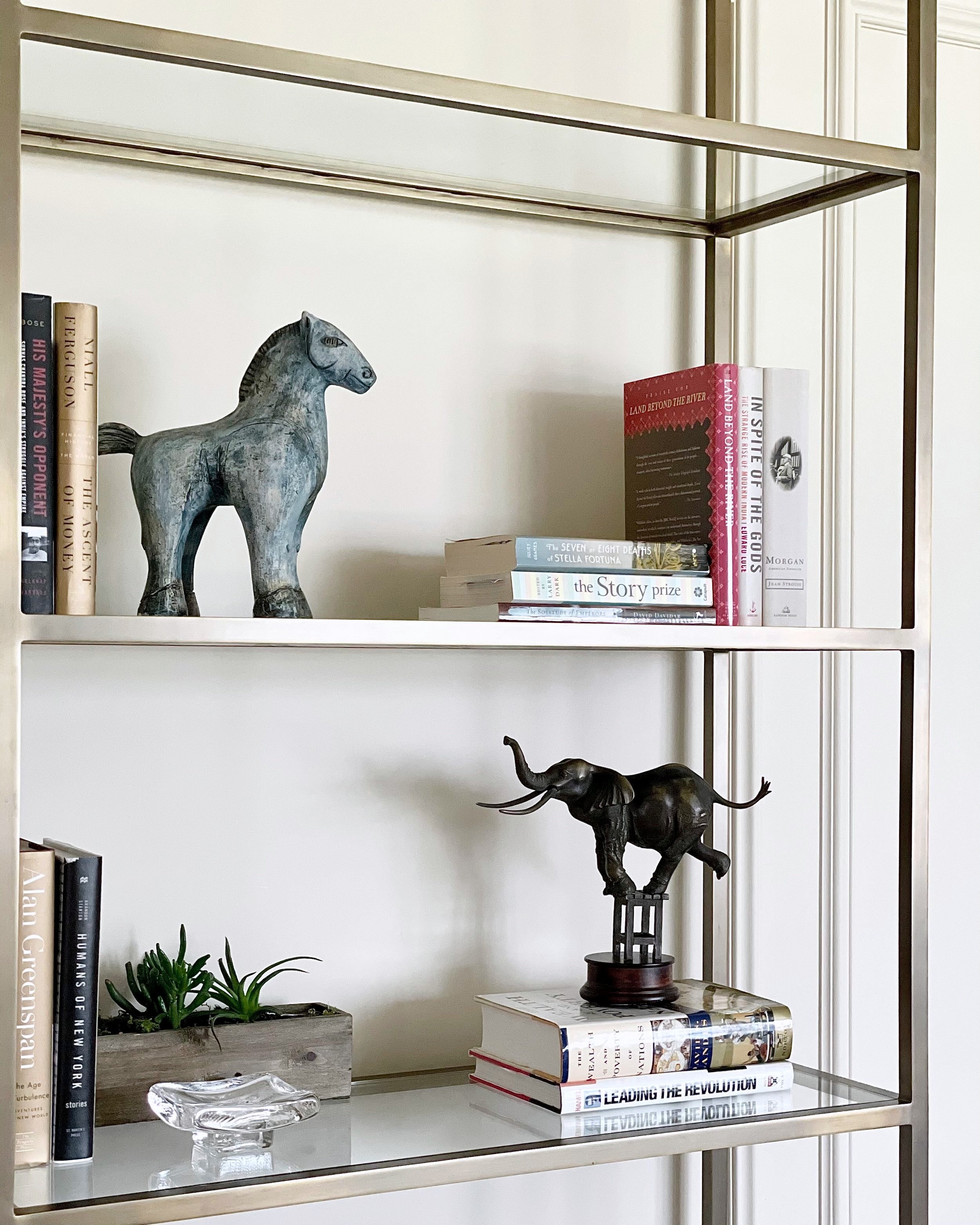
Books are the foundation. I use them two ways: standing upright as bookends at the edge of a shelf, and stacked flat to create a base for an object. A stack of three or four books lifts a small sculpture or a vase to a better height and gives it a stage.
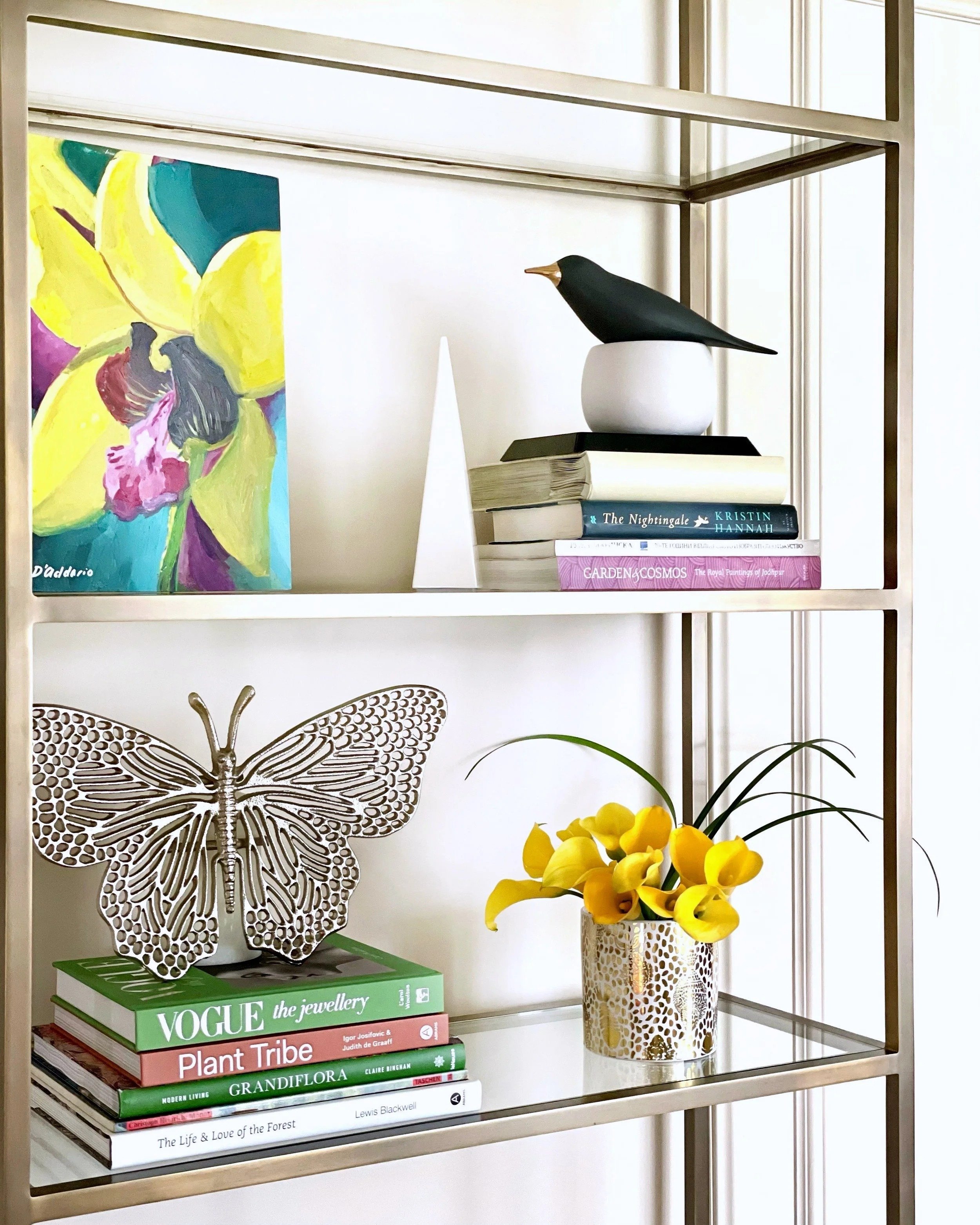
Group books by color or by size rather than by subject. A stack of black spines grounds a shelf. A stack in soft greens or pinks adds a quiet note of color. Turn a few with the pages facing out when the spines clash with the rest of the room.
One important thing. I NEVER use books I do not read. I do not go online and purchase books for the sole purpose of styling a shelf. The books I use are part of my life, my inspiration, my culture and knowledge.
Choose One Hero Per Shelf
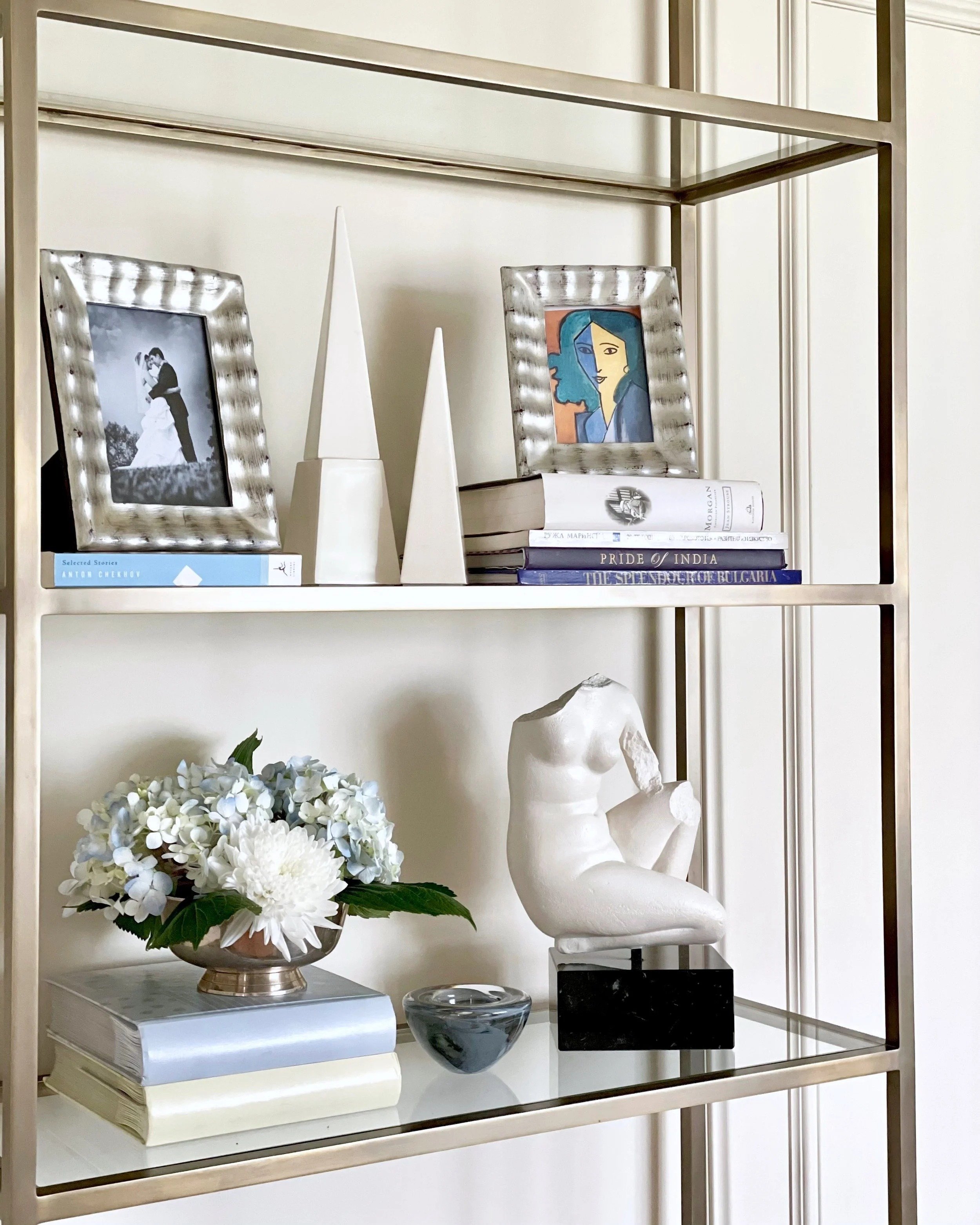
Every shelf needs one object the eye goes to first. On one shelf it is a terracotta horse. On another it is a bronze elephant balancing on a stool, or a white torso on a black base. The hero should be larger or bolder than everything around it.
Once you have your hero, keep the supporting pieces smaller and simpler. A white obelisk, a small glass bowl or a candle is enough. If two objects compete for attention, move one of them to a different shelf.
Bring In Art
Art does not belong only on the walls. Lean a small framed print or painting against the back of a shelf. It adds depth and color, and you can change it without a nail or a hammer.
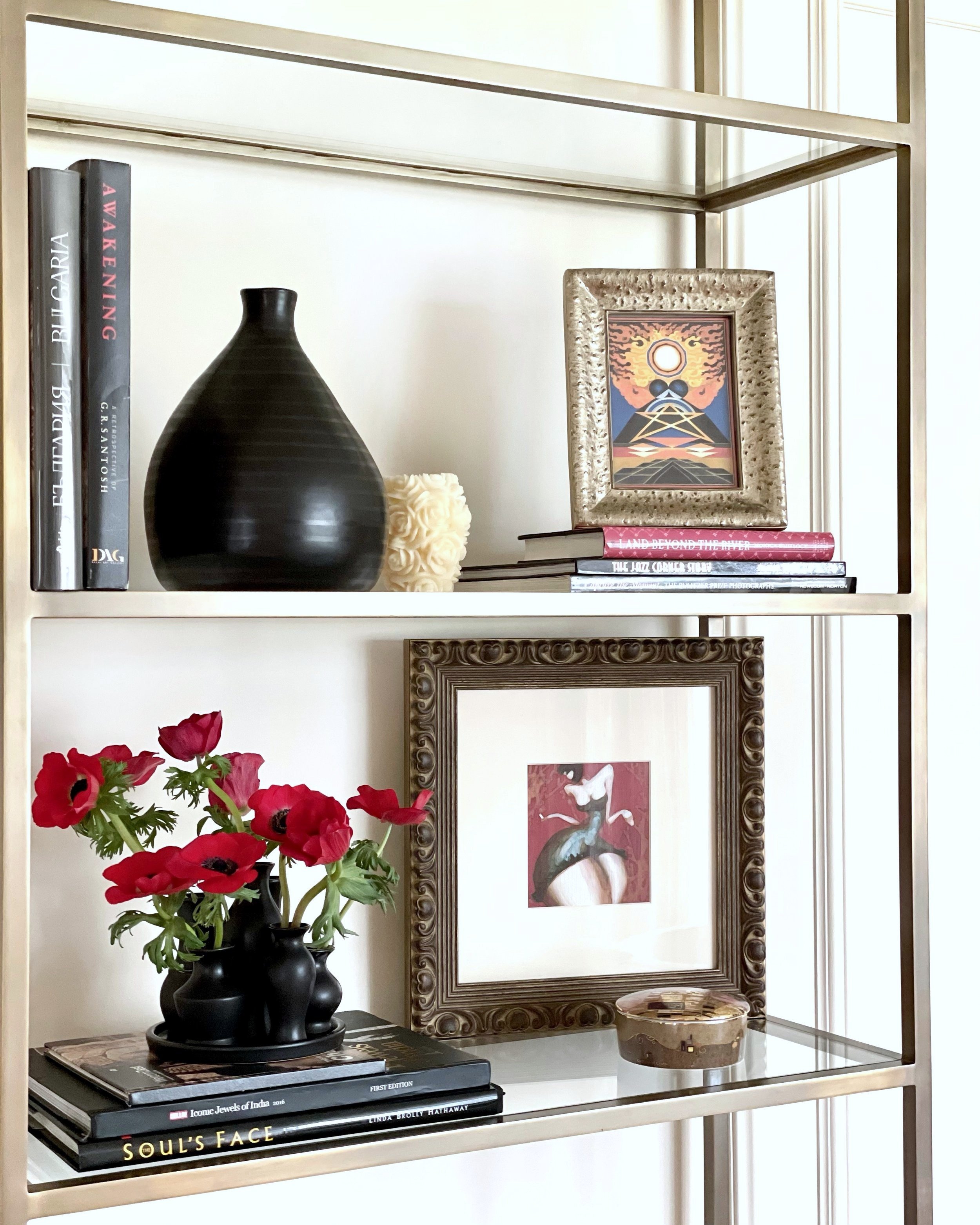
I like to mix frames. A carved gold frame next to a plain silver one keeps the shelf from feeling like a store display. Small works by artists you love, prints from a trip, or a child's painting in a good frame all earn a place here.
Add One Living Thing
A shelf of objects starts to feel static without something alive. Fresh flowers, a branch from the garden or a small plant change the whole mood. Blue hydrangeas soften a shelf of white and silver. Yellow calla lilies bring warmth next to dark books. Red anemones in a black vase look bold and graphic.
Keep the arrangement low and loose so it does not block the art behind it.
Work in Triangles
Place your tallest piece on one side, a medium piece on the other, and something low in between. This creates a triangle the eye follows across the shelf. Then offset the next shelf down so the tall piece sits on the opposite side. Step back and squint. If one side looks heavier, move a piece until it feels balanced.
Leave Room to Breathe
Empty space is part of the design. On glass shelves especially, the open space lets light pass through and keeps the whole piece feeling light. A good test: when you think a shelf is finished, take one thing away.
Make It Personal
The best shelves hold objects with a story. A sculpture from a trip, a book from a place you once lived, a family photo in a beautiful frame. These pieces make a shelf yours, and no catalog can give you that.
If your shelves feel stuck, start small. Clear one shelf completely, pick a hero, add a stack of books, one piece of art and something living. Then build from there.
And if you would like a second pair of eyes, I am happy to help. A styling consultation is one of the simplest ways to start working together.